EIJI SUMI

Ubon Agenda


Mango Seeds: Philosophy of Freedom / Education, Self-Awareness, and the Possibility of Freedom


In The Philosophy of Freedom, Rudolf Steiner argues that true freedom cannot emerge from obedience to external authority alone. Whether the authority is embodied by family, state, church, society, or even an internalized moral command accepted without reflection, human action remains determined by forces outside the autonomous self. Freedom, for Steiner, is not simply the absence of constraints but the capacity of individuals to act from consciously developed insight. It is achieved when a person becomes capable of generating moral action through self-aware thinking rather than through inherited customs, institutional authority, or social conditioning.

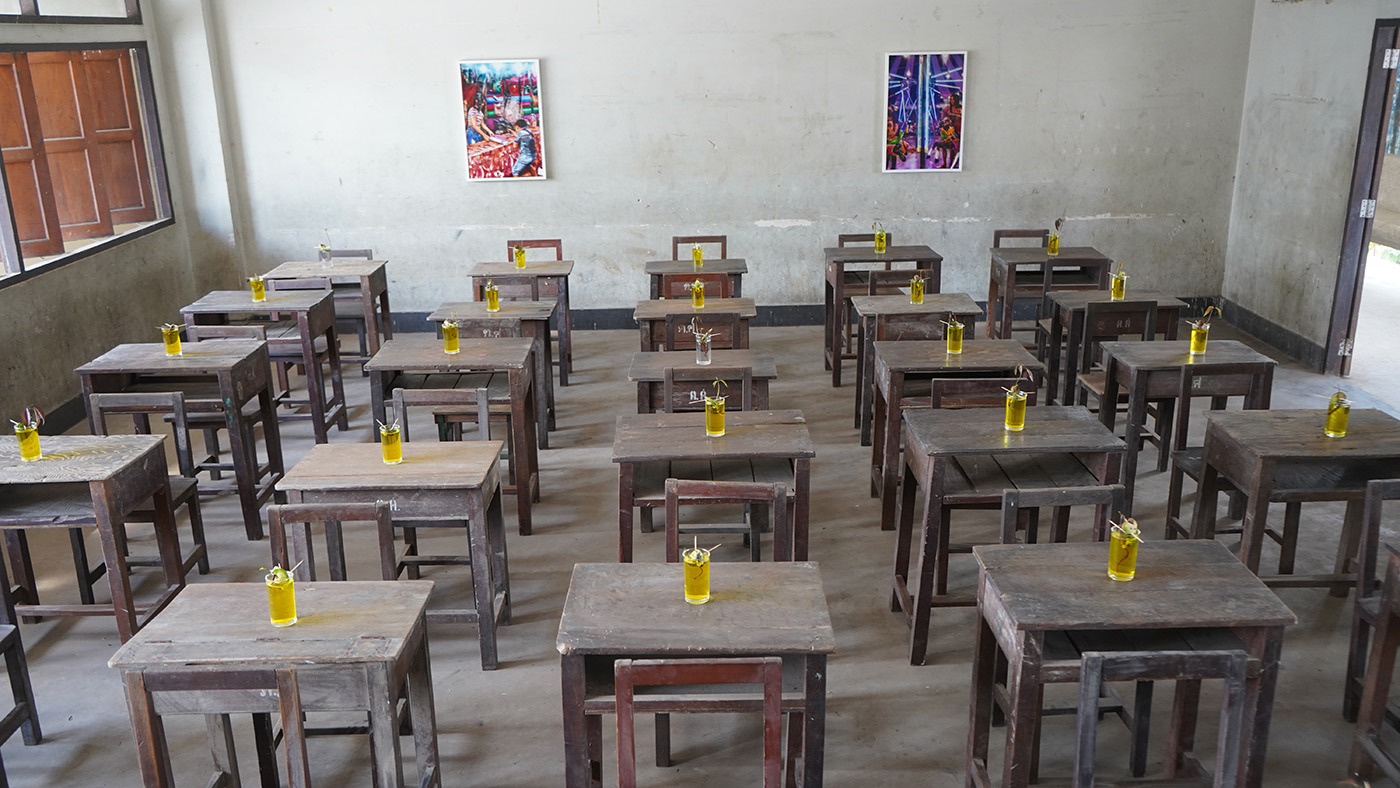
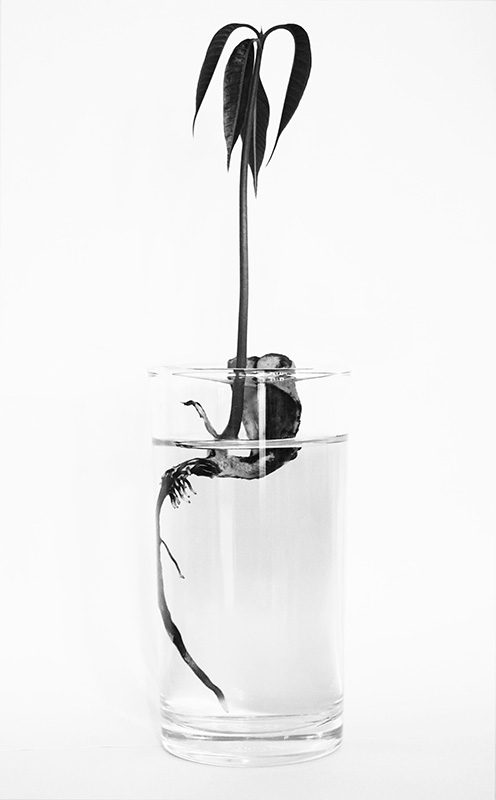
This philosophical framework provides a compelling lens through which to understand Eiji Sumi’s artwork Mango Seeds. The work examines the historical and cultural landscape of Ubon Ratchathani, a region whose identity has been shaped by shifting borders, political centralization, and the construction of national consciousness. Through the simple yet potent image of the mango seed, Sumi reflects on how education, culture, and historical narratives shape individual and collective awareness, while simultaneously asking whether genuine freedom remains possible within such systems.

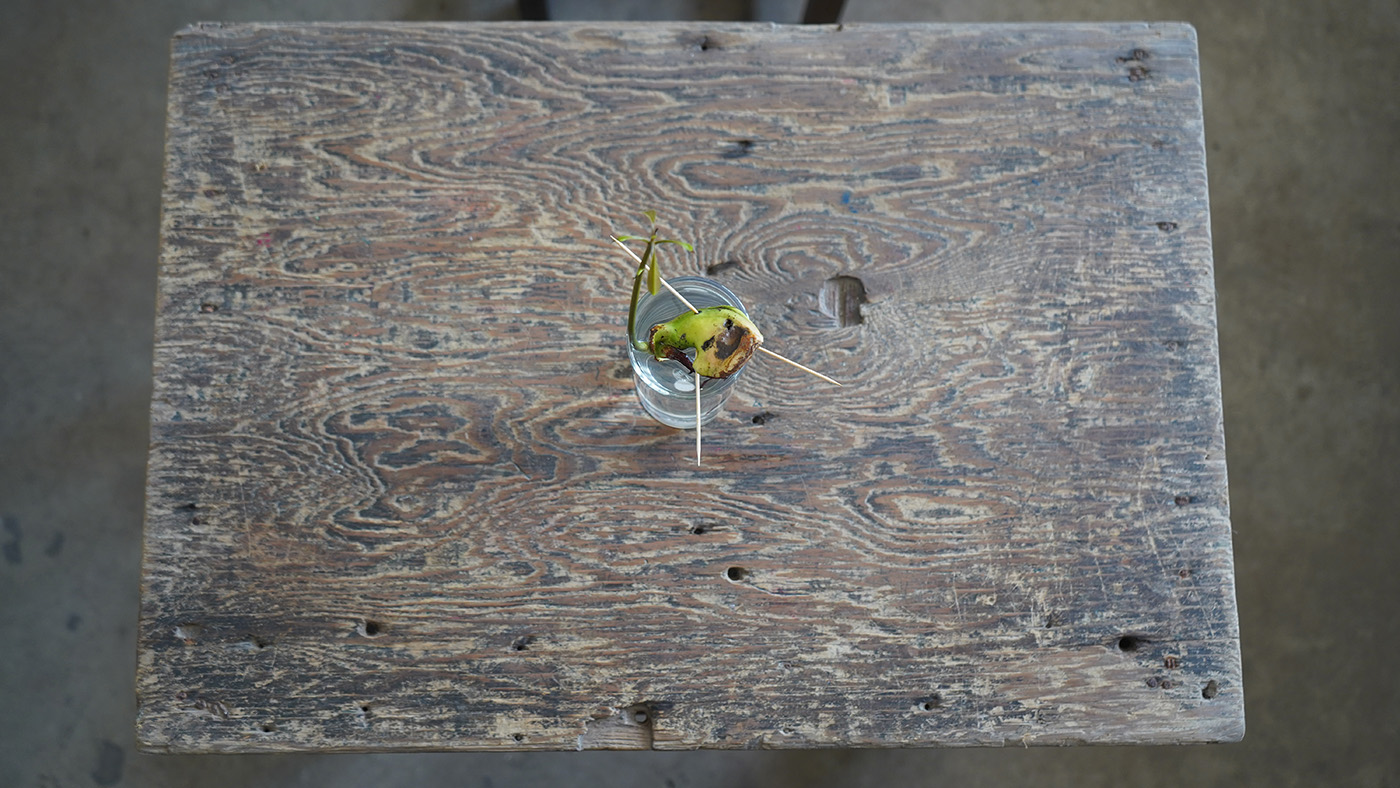
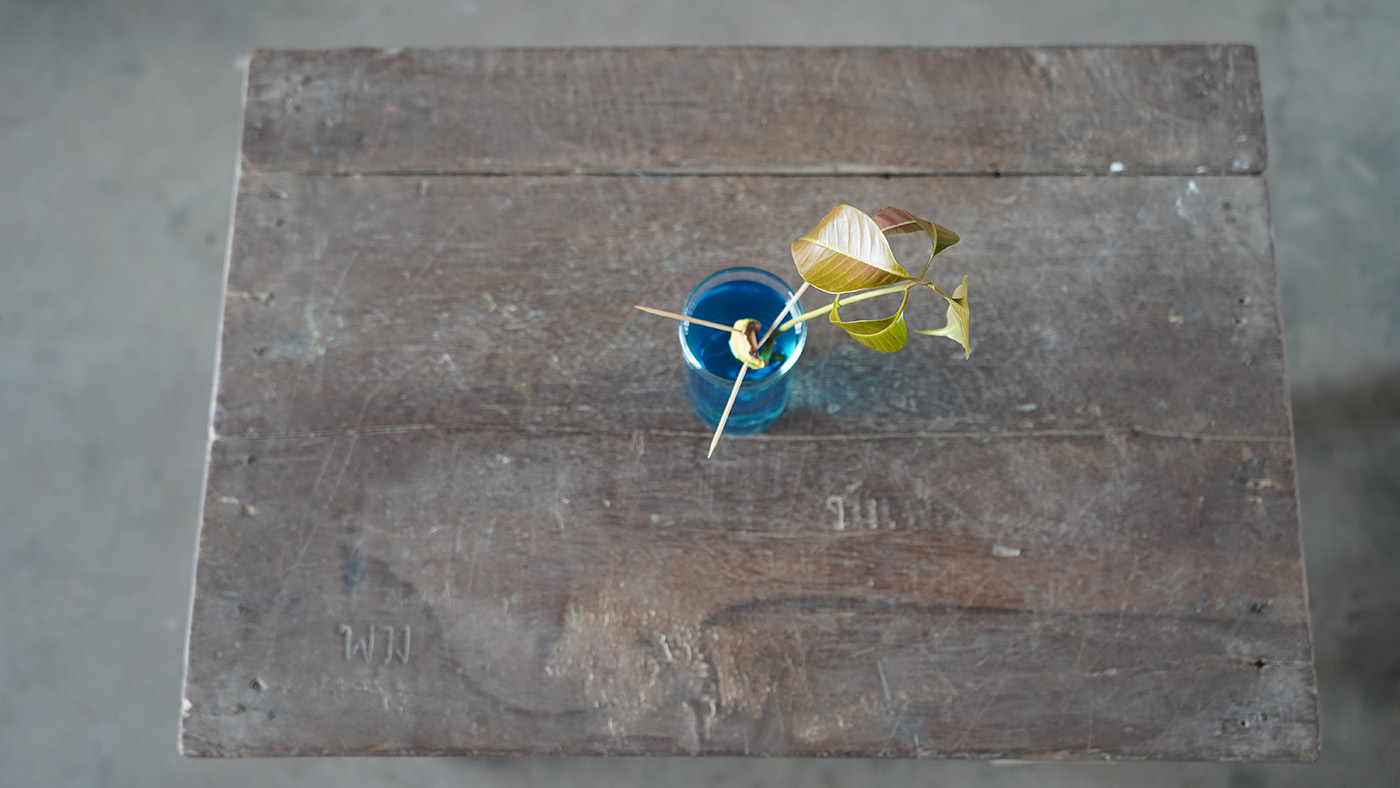
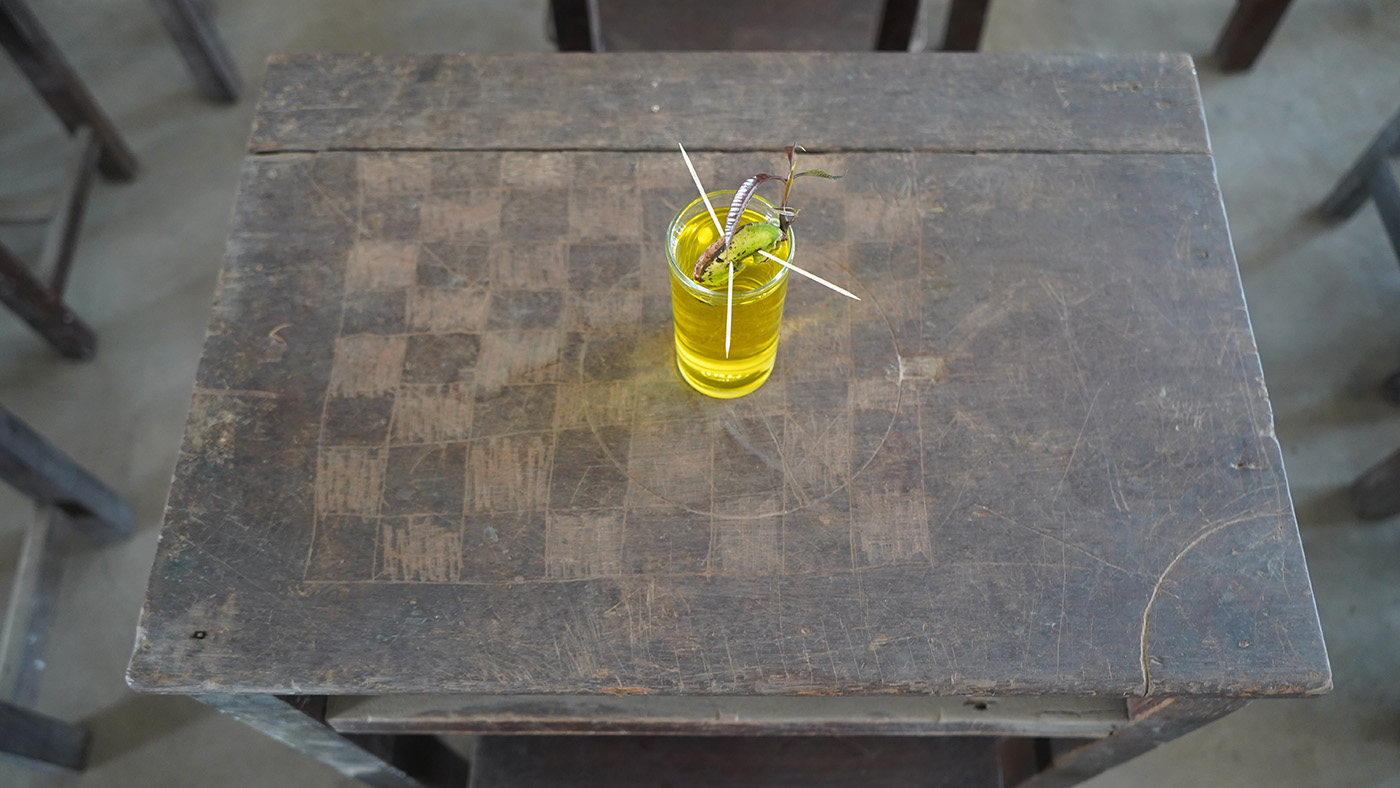
The mango seed functions as a metaphor for latent potential. Within the seed exists the possibility of an entirely new tree, yet its growth is dependent upon environmental conditions. Likewise, human consciousness contains the potential for freedom, but this freedom is cultivated within structures that influence and often determine how individuals perceive themselves and the world. In Ubon, these structures are inseparable from the historical process through which modern Thailand emerged as a nation-state.

Prior to the consolidation of modern national borders, the Mekong region was characterized by fluid cultural and political relationships. Communities on both sides of the river shared languages, religious traditions, kinship networks, and systems of exchange. The present distinction between “Thai” and “Lao” identities did not exist in the rigid form familiar today. During the colonial period, however, the geopolitical pressures exerted by France and Britain transformed the region. The Siamese state responded by centralizing administrative power and developing mechanisms through which a coherent national identity could be produced and maintained.

Education became one of the most powerful instruments in this process. Schools standardized language, history, and cultural values, creating a unified narrative of Thai identity that extended from Bangkok to peripheral regions such as Ubon. Through textbooks, curricula, maps, and rituals, citizens learned not only facts but also a particular understanding of themselves and their place within the nation. National consciousness was cultivated through pedagogical structures that appeared natural but were, in reality, carefully constructed.

Steiner’s critique of naïve realism is particularly relevant here. According to Steiner, individuals often accept authority because it presents itself as an unquestionable reality. What begins as an external command gradually becomes internalized as conscience or common sense. People come to believe that the values they have inherited are entirely their own, even when these values originate in systems of power beyond their awareness.

The historical formation of Thai national identity can be understood through this mechanism. Educational and cultural institutions do not merely transmit knowledge; they produce frameworks through which reality itself is interpreted. In border regions such as Ubon, where cultural affiliations historically extended across present-day national boundaries, the construction of national consciousness required the selective remembrance and forgetting of certain histories. The resulting identity appears natural and self-evident, yet it is the product of historical processes that remain largely invisible.

Sumi’s Mango Seeds engages this tension between inherited identity and self-awareness. The seed symbolizes both the transmission of culture and the possibility of transformation. Just as a seed carries genetic information from previous generations, individuals inherit languages, beliefs, customs, and historical narratives. Yet a seed is not a finished object. It possesses the capacity to develop in unpredictable ways. The artwork therefore asks whether education should merely reproduce inherited structures or whether it should cultivate the capacity for critical reflection and self-determination.

This question resonates directly with Steiner’s concept of freedom. For Steiner, freedom emerges not through rejection of culture or tradition but through conscious engagement with them. An individual becomes free when inherited ideas are no longer accepted automatically but are examined, transformed, and integrated through active thinking. Freedom is thus inseparable from self-awareness. It requires recognizing the forces that shape consciousness while simultaneously developing the ability to think beyond them.

Within this framework, Mango Seeds can be understood as a meditation on education itself. The work suggests that education has a dual character. On one hand, it transmits cultural memory and social cohesion. On the other hand, it risks becoming a mechanism through which authority reproduces itself across generations. The challenge is not simply to educate individuals into existing systems but to cultivate the self-awareness necessary for those systems to be critically examined.
The historical context of Ubon intensifies this inquiry. As a region situated at the intersection of multiple cultural histories, Ubon reveals that identity is neither fixed nor natural. It is formed through processes of negotiation, adaptation, and political construction. By foregrounding this history, Sumi exposes the contingency of national narratives and invites viewers to reconsider the assumptions through which they understand belonging, citizenship, and cultural identity.
Steiner writes that “only through the building up of a moral world order by intelligent self-conscious individuals can the world process be led towards its goal.” This statement shifts responsibility from institutions to individuals. Freedom cannot be granted by the state, religion, or any external authority. It must be actively realized through conscious thought and moral imagination.

Seen through this perspective, the mango seed becomes a powerful image of freedom. It is not merely a symbol of origin but of possibility. It contains the potential to reproduce inherited structures, yet it also contains the potential for new forms of growth. The artwork therefore challenges viewers to consider whether education serves only to perpetuate established identities or whether it can become a process through which individuals develop the self-awareness necessary to transcend them.

Ultimately, Mango Seeds is not simply about the history of Ubon, nor solely about the relationship between Thailand and Laos. It is an exploration of how human beings become conscious of themselves within systems of culture, education, and power. Through the metaphor of the seed, Sumi asks a fundamentally philosophical question: how can individuals recognize the conditions that have shaped them while cultivating the freedom to imagine and become something beyond them?

Copyright © 2021 Studio Eiji Sumi


Copyright © 2021 Studio Eiji Sumi